So over the course I have been designing something as an intervention, I have looked at news stories, and various other sources to help design something to treat and help people. Using techniques from Art & Narrative Therapy, but for a web application. I suppose I need a patent for that? So I am going to use screenshots to back up my work in the blog, as it is research as I am going. In many of the blog posts where I was doing assessments in my old blog, the links are not there, just “blanks.” I am pretty worried right now for humanity. So I just read an abstract, here, and I am most worried about the kids in this immense amount of isolation they are in. Things I am worried about? Suicidal Ideation (in the youth) and Impulsivity as a reaction to the stress. Let me show you what that looks like via youtubes.
One of the reasons I have the greatest respect for Matt Mullenweg and WordPress is because he built this as a container, for writers. So, I’m going to show a few things today, as relate to what I know from Depth Psychology as relates to the use of a Genogram and Treatment Planner. I also want to talk from a standpoint of Ecopsychology.
So that genogram again, only visually this time:
Years 1922———————————————————————–2022
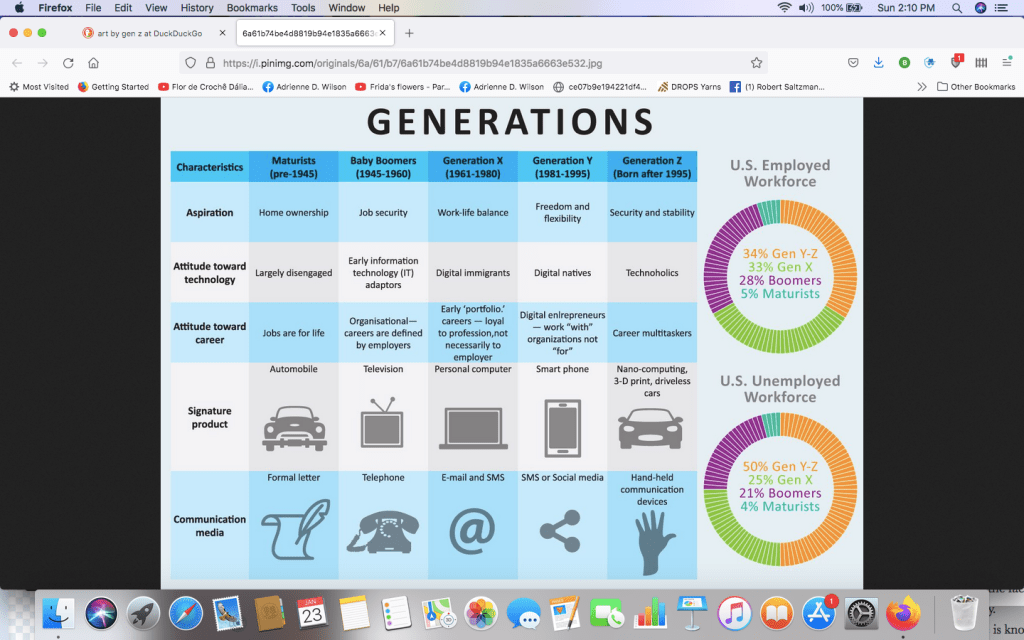
I don’t want to see broken links, again. The way the web is constantly being scrubbed is not a good thing. I first noticed that when I was writing about politics a few years ago in my old blog. So writing about what i have my MA in? Well you will see me link to the Wikipedia and many other sources, including news stories. My diagnostic skills. When you are becoming a therapist, especially from the school I went to? I was trained by the very best. Gen Z cannot recognize the level of impulsivity it might have. Because it is inside of a generation. When history marches on, as it will, a generation can look “back” at things and know itself.
I want to talk a little about how I came up with my theory. It was in my internship for Family Service Agency. In California, we are to do internships of 3,000 hours. It was really hard to get an internship, in the first place, and so, what we have is a way to discuss cases, around a table. The intern therapists brought in a case study of a client, and there were supervisors, from Clinical Psychology and also Psychiatry who supervised us. So, all of my papers are something I am looking back at now, and also remembering things that happened. But what I want Matt to know, I really mean this, is that I know I can trust him. So, I was “non-paid” for beyond the 3,000 hours that began in 1995 – 2003, and I did my hours while I was working for a newspaper. Those years of my life were so hard, my god. There is more to say about Medical Ethics, out of me, but Senator Grassley went after ethics around Meds, and I really love that, because, once the consulting psychiatrist told me she was putting two year olds on Prozac? Well, we are now many years forward from that time.
As you can see above, the “Criteria For” Impulsivity has changed over time.
I just want to say bless all of you to ma.tt and to WordPress, for what all of you created, for this world.
I think we are going to have to use a reverse medical model to be able to diagnose, and treat. Because if in 1998, two year olds are being put on Prozac and many, many other things? We are looking at Gen Z. My thesis is very simple, and I am very worried for the kids. When I say that? I just mean, I am worried for the era they have lived. So, In a post 9/11 climate they were very, very young. It is very possible that they were overmedicated, so very early. Then they came of age, and all the things available to adults also became available to them. The kinds of news stories that we see about locking dogs and babies in cars under sweltering heat? They might not have the “cognition” to understand what they are doing. So it is very scary. But we are going to make a treatment plan here, and it can be used as a new treatment paradigm. In the web itself. I swore to the oath of Hippocrates when I graduated. I meant that. ❤
You can listen to this, about 5 minutes long read by Remy in a female voice. Or you can watch and read.
In Family Systems Theory, we can use a tool called the Genogram across a time line for assessment. It’s one of the things I learned up at Pacifica Graduate Institute during my training in 1996. We use it as a tool to look into “history” of the client, so, it is a way of looking at the presenting problem and getting back story on the Family. So over the first few sessions we are able to get a really clear picture of who the person is. In this respect, let’s use it to look at kids across a spectrum of child development across time. So, let’s just use 100 years as a timeline.
1922———————————————————–>2022
In 1922, children basically had parents who were watching movies, and they were listening to the radio. They listened to records, as well. For toys the kids didn’t have the kinds of things they have now. We can use an old Warner Brothers clip, to look at say, kids way back when. In my grandparent’s era, and the kids “playing.”
Let’s fast forward, because – how kids are looking at “outside world” or cultural surround, is that they are looking at character studies on film in the movies! In the characters of “live humans” and they were probably taken to the movies, to see this on the big screen, as an amusement, or a treat. Kids depicted way back then would have been many parents of the kids during the post WW2 Baby Boom – who give birth into the late 50’s and early 60’s, across the globe. By 1960, most households have access to a television. In California, there were 13 channels at that time. Let’s break the genogram into segments of time.
1922———————————–1952——————————–2022
Early color television from the 1950’s. We are still looking at the “human figure” – you can also see early Ed Sullivan.
People are going to the movies, and watching shows on TV. It’s 1954. Let’s fast forward to 1974 along the timeline.
1922———————————————–>1974———————2022
Piaget refers in his theories on Child Development, that the child has up to age nine – the period of “imaginal” thinking. We will be looking into what has been in the cultural surround in later decades soon. In the writer’s own childhood, there were cartoons on television in the era that is 1960’s, and we are also watching Disney Films as character studies. For me this began at “Fantasia” so we are looking at TV as “spectacle” and also art. On something like 13 channels. Computers will not become “toys” for my generation, but by 1984, they will be, in the cultural surround. It was Robert Sardello’s work, when I was up at Pacifica, that sparked a paper for Dr. Mary Watkins.
I went to buy a first computer at Circuit City, in 1995, strictly for Graduate School because it would be easier to write papers, and Apple Performa was what I got at a now defunct store then called Circuit City. I was struck by the wall of images presented to me, and I saw my first shooter game? So I wrote about that on child development for Dr. Watlkin’s class. So let’s think of this as “research.”
Let’s take a look at what Fantasia became in that childhood, with birth date 1997 as global.
Let’s use this show, and compare with the first clip of “Spanky and Our Gang” from the top clip. We are looking at the same thing, but, the human figure is shown in the sky as a babyfaced sun. Listen to how the “sounds” are shown, and how the cartoon figures “play” as learning as well as look at the sets. It’s a very different world, isn’t it? Then we are going to fast forward to the “games” they will play in year 2007. Piaget felt that at age 10, children reach “cognition.”
Let’s look at the games the kids play in 2007, based on the next clip. we can see how different the toys became, after 1984.
So, this sort of game? Is what the kids played at ‘cognition” — for my generation, at age 10, it was board games. These had not been invented yet. As we think of the school shootings, such as the one that happened at UCSB, another of my Alma Maters my interest as a scholar is to return to Sardello’s posit. Anyway, what I want to do, is help solve this. If in the top clip here, we have a tele-baby in the sky, as a pre-verbal child “watching” — we are not seeing a human figure. We have “blob’ animations that talk baby talk, in a sense. They present as in a kind of space ship as earth house. When clips are shown of actual children at a beach playing – that is “reality” for the kids. So in the second clip, we are looking at what the kids might play as games, in 2007. At age ten.
Why I used the genogram?
Show differences along a timeline.
Questions might be:
For this generation – Can they hear or see “the natural world.”
Were they diagnosed and put on medications simply because of the world they were born into?
If so, for the child at 2007 who is ten, let’s give a birthdate of 1997, and then insert 9/11 as outer real life cultural surround. They are three to four years old, that year. So, this is me in 2014 talking about a treatment plan we could build, that uses Art and Narrative Therapy using the web itself.
Let me show you some images. I began to be concerned about some of the art I was seeing in the web, because of the three colors in art related to images of the emo heart.
using word clouds to assess and treat for meaning, as reality testing
Jung considered colors along a spectrum as indicative of the state of psyche with black and red, along the spectrum as indicators of a very deep depression. But what concerns me most in these, is that I cannot see the eyes or the mouths, so I took some screenshots of the art I was looking at in a post 9/11 climate.
With the recent news stories about people crashing while driving on “auto pilot” in cars, I am wondering if they do not realize they are even driving.
It could be that a generation of children raised on these screens, with the intense focus at the screen, and the prescripted games do not have reality testing. When I say this, what I mean is that they may not be able to differentiate between what is “real” and not real.
For instance, on television, in the advertising, we see animations paired with live people as a kind of cute justaposition. But, we need to consider the cultural surround of a generation raised on games in the box.
Take a look at these images and it is very concerning. Yesterday I took some screen shots of this and wonder is it possible that a generation raised on boxes, could have eye problems and cannot see? When I have searched it is so dark, for them. So I began to try and understand about the eyes. many times the eyes are black holes. My sense of this, “can’t see.”
Now as a therapist working with a client, in Art and Narrative, you ask them, what does this mean? So, I once came up with a concept called The Alchemy Project and I made a blog post on that here in WordPress, but how we might something like a treatment or a cure? Well, we need to see what these things mean, and the only way to do that is to open up a dialogue about that. The blogs are a blank slate, where people might draw, or use collage to create a reality based self, by also using Narrative, or words. I have an idea that we might also be able to use the word collage tools to make an image, Of the words. That they might use when taliking? So I am going to try and find one and run my text in this post through it.
Thank you WordPress and ma.tt for making this tool, I really mean that.
Writing up a continuation of my research published here in WordPress as Valentine Bonnaire. My blog started I think in 2007 and I had an established nom de plume already as the above, in the web, so at first I was really happy to find WordPress, but in the time I was writing, how WordPress has developed has just amazed me. I knew at the time I was researching that Facebook, WordPress, and Twitter could be used. But, now I would not choose Twitter based on censorship issues. I found both Facebook and Twitter because I was here in WordPress, to begin with.
Because I once worked for a Newspaper for 20 years, and am a graduate of The University of California Class of 1984, Art History and Pacifica Graduate Institute, Class of 1995 Counseling Psychology, Emphasis Depth Psychology I have written and developed some interventions to news stories, and problems I have seen from my perspective.
WordPress has been one of the most magnificent things I have ever seen, and ma.tt, to have created something like you have done, it is hard to explain. So 1995 was the year I bought my first “home” computer – an Apple Performa. I had used computers at work for years, but not had one at home. The day I bought it, I was standing in Circuit City here in town and saw something which later developed into a paper I wrote for Dr. Mary Watkins, on child development and pre-scripted games in our first year at school. It was only because I had WordPress, that I was able to write and research on this topic with complete ease in the years post 2007.
So, in the course of the last few days I have been thinking of both you Matt and also Mark and talked about both of you over in Facebook, because, both places are “real” in the sense that in FB I can attach to old colleagues and friends, and here I can speak with so much ease, and also link to things. Then I can cut and paste over in FB, my own link. So the two of you were born in 1984, and what you know about the world of computers is well, a result of what both of you designed?
I had a typewriter when I went to UCSB. That long ago. So, as I can write and illustrate so easily in here, the world of WordPress, well, let’s get going on stopping some problems we are having with Mental Health. I’m going to write up some things here in the blog and take them over to FB, as I go. It is a new treatment paradigm, that I want to give to William at Noozhawk, and I recently was able to watch him speak in Youtube. I loved that he said WordPress had approached him because of his awards, and so the plan has Medical Ethics, just as he has Journalistic Ethics.
I was trained by Dr. Lionel Corbett, and swore to the Oath of Hippocrates that year we graduated, myself. So, since 1995, when so many generations of people have entered the web, use the web, play games on the web and all of that, WordPress is the last free “frontier” as it were, on earth. The plan I am developing can be used across any population or culture across the globe, just as WordPress does that. We do not want to have another tragedy like the one at UCSB or at Columbine, nor have teen girls with Suicidal Ideation because of peer pressure and so forth. Consider this tool, as a modern day version of the old Rorschach test, except this one is a whole new deal, because I am designing it. It uses techniques from Art and Narrative Therapy to help assess and treat.
Why I would hope WordPress would say okay? Because what you provide is a place for it, and not only that, the very fact you let people make a free blog. Schools could use this place? For the kids right now, in this immense isolation.
The landscape opens. He didn’t want to leave you, and he wasn’t mean. This is what you will learn. Last night in the harbor remembering the boat leaving shore, the soft laps of the water. Four girls of 22, arriving wanting to pet your dog.
You tell them, the harbor is safe, the men down here are the best men you will ever meet. One of them is tipsy. You feel you know them, know what comes ahead. Not that you can, just that you want it to be better for them.
I had to learn they were all different.
They will be.
He’s standing holding Alladin in his arms like a baby, and he purrs. The bamboo rustles in the rain outside your tiny world.
He knows you are cold, and he brings a union suit, and a candle.
He builds shelves in your pantry, handy with a hammer.
The girls tell you that they don’t want Botox or butt lifts.
You smile and say don’t follow that road that they might have planned for you.
“We’re not going to,” they say.
They could be grandchildren.
How strange to suddenly be thinking like that, sending warnings across vast expanses like 40 years of time.
They are all just starting in College. You remember.
The freedom comes later.
The freedom is something that you have to carve, because there will be times it’s going to seem impossible to stay with him.
Little pieces of something that was the thing you might have wanted, once.
It might be the thing that you wanted for yourself.
How can you prevent someone from making the same mistakes that you did?
Is it even possible?
My best friend was pregnant at my wedding, something like eight months along. She wasn’t married to him yet, that would come later, as would her second child. Towheads. It’s going to be almost impossible to keep the friendship, they are buying a house in a different town, your lives diverge from being the two best friends on a beach, waves lapping at your skirts, collecting shells and dreams together.
He chose the rings.
“I want these to match,” he said.
Maybe in your mind, like Cinderella, you were expecting the down on one knee, with a flashy diamond.
That’s not how it happened though.
There isn’t going to be a Bridal Registry for you.
Maybe it is the era.
She doesn’t have a wedding either.
She’s just pregnant standing there, and your lives divide in the courthouse tower, that day. You can’t be the mothers that you planned, pushing strollers at the seashore.
She asks how much you make, and you don’t know what to say, because, the path you chose was job, and not hers, and you are afraid of her path. She has to depend on him, and you had tried that the first and second times you were in love.
It’s what she tells you later.
He controls everything.
He tells her, dropping a five dollar bill in the center of the table, that she is supposed to feed the kids on that.
She has a pack of hot dogs, and some milk for them.
You drive her to the store.
You pay for the groceries, thinking of your mother and how she did that for all her friends in the same kind of jam, when you were little. The mother who made you her best friend. The mother who mothered your best friend. Instead of you.
You are quiet driving back home, the roads curving down from Ojai.
You go back into work and realize you have to be strong.
You learn to wriggle away from the arms encircling you at the light table. You learn to stand on your own two feet, with the males at work.
She’s your best friend and the two of you are 30.
“Tell me how much you make,” she says.
“How can you?”
It seems too terrible, to name the figure. It’s not that much, actually. You cannot stand what he is doing to her. Your best friend. The two of you were only fourteen, once, full of dreams about what the future was going to hold.
They like to try and intimidate you at work.
That’s when you become fierce.
Your last act of kindness was another defloration. He’s 36, one of those tech types and he’s a virgin. At twenty nine, you cannot believe this is true, but it is.
He’s madly in love with a co-worker out at the tech place he works. You’re friends, having Thai. He starts asking you how to approach her, he is almost obsessed he is so in love. You try walking him through what to do, what might work, like sending her flowers, just because.
The reason he is in this spot?
He’s not one of the really handsome ones. It will be more difficult for guys like him.
Still, it seems so unfair, and so you offer to show him how.
Perhaps you have spent your life trying to help others.
What is experience for?
You congratulate yourself later. He manages a ten year relationship after that.
Not with her, but you helped him break the ice. He won’t have kids either.
At work in Ad Alley, you learn to perform the simple functions of the job. Taking studio classes will be where you turn. Because you have a job, you can pay for these.
In Benet’s class she has you learn assemblage. Art will be the only way you can express feelings. You learn that, quickly enough, through her.
There is a cardboard box you wrap with fluffy cotton batting, pure white over the red lights you strung inside. They glow pink under the layers. He watches while you wrap it, not understanding what it is like to get crits in Art classes. He drives you in the MGA to class, smiling. You are holding it on your lap, like the day with the Pavlova.
It’s a womb in all purity, emitting a sound you can’t remember. From the Walkman inside. You fill it with cotton balls and q-tips, those for eggs and sperm.
The grey box is set to the side.
You never open it again.
Gold ring on your finger.
You’ve said certain vows.
You’ve gotten another A.
Your best friend leaves him.
She marries another, who will raise the kids.
She begins school. She begins school after the kids are old enough, and she starts up at the lost path. She was raped too, she tells you.
“He raped me,” she says.
Years later you will write it, for the other little 22 year olds.
You don’t want anything bad to happen to them.
It hurts so much to lay it out on the pages, remembering what they had done to the two of you.
It becomes easier to work with sound, those years. You wear the Walkman to work, it gives you silence, while you paste up. You can tune all of it out.
Cardboard flats hold each ad.
There are mountains of them.
Mountains and mountains that have to run the next day or the day after, the work is never ending. So is the loyalty. To him and to this place.
You think work is like a family.
Later you will learn it isn’t.
Don’t avoid it whispers the Muse in your head. Don’t avoid talking about the hardest things, or all the things left unsaid, for the 22 year olds coming up behind you.
You don’t want them to miss having kids.
You don’t want them to miss what everyone calls perfection in this lifetime.
He left her a five dollar bill to feed her kids, on a shabby table, in her well scrubbed kitchen.
“At least you aren’t saddled with kids,” your mother says.
Suddenly you can see how you took to heart all the things she had ever said.
Your mother.
“Washers and Dryers,” he laughs, as the two of you watch them spin. You bought them for Pedregosa, yourself, at Sears. Just minis. You just want things to be clean and perfect. At all times, proving yourself to be a girl, proving yourself to your friends.
The clock going off in your head, banging like a gong.
“Fuck it,” he says.
The thermometer goes cold on the bed.
He doesn’t want the responsibility.
He should have told you, you think.
It takes years to understand.
Years later, learning to become the therapist you will become, one named Don pushes your buttons so hard, the anger wells up as tears.
“Why didn’t you have kids in your twenties?”
He has no concept of what other men are like, in his perfect little ordered world.
Does he?
He tries with EMDR to get at it. They want you cleaned out, empty of emotion, so that you can cure others.
A scented candle burns.
Birds sing outside.
The sea sings in all her colors, blue into silver, the purple out over the islands. You have managed to write past it. The hardest part. You could not have done what she had done. You could never be that vulnerable. She didn’t have a mom and dad either. You wonder where they all went?
You wonder why they couldn’t be parents.
Generation Warhol had Generation Woodstock.
Generation Warhol had no idea how hard it was going to be for their kids.
It’s easier to put pen to paper.
It’s easier to put paint to canvas.
It’s easier to try and blend it all together into purple.
How can you begin to trust men when you didn’t have a father?
You can’t.
He was supposed to be there, be there, be there, and he wasn’t.
It’s 1988.
The clock ticks.
The clock ticks until it goes off screaming in your head.
You’ll never be the girl some guy throws down $5 on a table for. Not ever.
You weep for what he put her through that year.
She and those two little towheads, that were so adorable.
Newspaperpeople Memoir by Adrienne Wilson copyright November 12, 2021 all rights reserved
The Pavlova is gorgeous, you’re bringing it to the Christmas Party in the MGA the two of you have, all decorated with flowers from your little garden in the tiny apartment you have behind the Craftsman on Pedregosa. You read the Los Angeles Times too, the Food Section and the Garden Section and suddenly you are pasting up color.
Sharon says, “What’s that?” as you place it on the waxing table, all covered with scratches from the years of Journeymen, and pages. It slid a bit on the floorboards, driving down, the flowers blurring into each other. You had no idea how to be a girlfriend, much less a wife. You buy magazines at the store that are going to explain how, one by one. It’s taken the place of the Winter Fruit Cocktail, you were known for. You will only stay in Grad School for one quarter. You drop when he takes over, the man that is going to be your husband.
“This is a kitchen, not a darkroom,” he says.
Suddenly you are working full time.
The paycheck doubles.
You don’t have any Seniority, though, and through her slitted eyes, she’s laughing, because she is about to move up a rung, with better hours. You are at the bottom. On that Floor. You have the full kit of Printer’s tools now. An Exacto, a Triangle, a Roller, and a Pica Pole. They engrave your initials on it.
Mr. Catamaran is too busy building a giant printing plant, to actually bother you. He’s rarely there, and it is a fun job, 2:30 to 10:00, at night. The level of camaraderie on the Floor, is best when Editorial comes down, with the blue pencils, the excitement growing, knowing that paper is coming out, the Printer’s hands fly all over the pages like birds, cutting in letters if they have to, in 6 point. The Street Final is what all of you are putting out, and Loveton jumps all over the room, wild, sweat flying off of him. The Sports Department is last. They are getting the scores right, no matter what. It’s the same on Political nights. The pages are covered in blue marks, Proof after Proof, until Editorial is satisfied. Bill, in Brooks Bros. Best dressed Newspaperman in the building. “Let’s put this paper to bed,” they smile, finally. Then the Press begins to roll, paper after paper, and we chase down any page, because anything can be fixed that late at night, in the rumble and roar, inking a million letters a day, all the words people in the City clip, for recipes, for obits, for favorite columnists, for everything actually.
They need you on Dayside for TV Week, and you have been taught to string the type. Chuck looks at you, towering over you, watching you make a mistake, and he says nothing. It’s miles and miles of type, miles that you use cotton string on to measure. If there is a mistake? Fixing it will take hours. He knows that. He’s just standing there laughing watching while you make it. The he watches while you tear it apart, and make it up all over again. Actually, that was part of the training. Becoming a Journeyman Printer was one of the hardest jobs I ever had. Ad Alley was going to be easier, somewhat.
Wenke is nicer than Bill had been. Ad Alley has Judy, and their own typists. New people are coming in, one by one. You will float, back and forth, with Joby to do whatever is needed. She had come from Offset, which they closed down.
You ask to learn Mark-Up, but it is too hard. Suddenly there will be the Camex Breeze.
Suddenly all of you will have to learn a new way of doing things.
There are electronic pens attached to huge tables, and a TV set is in front of you.
There are so many new women in the room, sitting at the sets. They’ve come in from outside, but mostly all locals, needing jobs. Many are educated, climbing ladders of their own, wanting to be in charge. Suddenly Wenke and Jed are the last two old timers. In Ad Alley.
You create the ads, and they come out intact.
The machines cost thousands of dollars.
The Printing Plant will also cost millions, it’s being built at the edge of the city. It’s going to be printing everything for miles around. Kim works in Systems, and Thad, and Sturtzenegger, all bearded and plaid, and they are raising the floor and laying in cables and everything is hurtling into the future, very fast. Sales reps come in to put you through trainings, State of the Art.
There are fonts, upon fonts, upon fonts, upon fonts. In the Art Department, they get the Macintosh that has even better fonts. None of the computers can talk to each other. All of them are different systems.
Suddenly it is the era of The Manifests. Hundreds of manifests, for every single thing, every ad. Nightly it prints out, green and white, and sprocketed edges. Everything is checked off against it.
It’s keeping track.
The Press is calling us DINKS, you see that headline “Dual Income No Kids” and it isn’t what you want. Under the floor the wires seethe like snakes, full of venom, we are becoming machines that have to work on software some guy planned.
I was a girl.
I was a female.
I wanted a baby and everything had become science in those years.
I hadn’t extracted my eggs.
It’s 1987.
The ring slips onto your finger.
My period was so heavy in those years I had to call in sick, sometimes, because of the cramps. They told me a baby would fix that, at 20. Now I was thirty, and I was chained to my job. Don’t make my mistake.
Tarrer comes down, and comes up behind me at the light table.
His hands plant themselves on both sides of me. At the table. I wriggle to escape it.
Do these machines emit radiation? I think to myself.
They might.
Planned Parenthood has given me a book on Fertility awareness. I’m going to have to use the thermometer. I want this for the two of us. We need a baby. We are four years together when we decide. But we aren’t on the same schedule anymore, and we are both exhausted most of the time. It’s hard for us to even be together.
I move from the hill down to his place, and because I am now a wife, I take on what I think wives are supposed to do. Magazines are going to be teaching me. At Von’s there are rows and rows of them that I study.
Fashion is leaving me.
I’m being drained dry.
We remodel a place, get our first pups out at Santa Barbara Humane.
We are a family at last.
The four of us and Alladin, and more cats I rescue.
We make a kitchen, and host our first Thanksgiving. We put in skylights.
I’m his third marriage, and Margaux and Carol call all the time wanting to talk to him, and I don’t know what to say.
He’s my third love.
I mean it when I take the vows, at last. “Till Death Do Us Part.”
I’m not going to live my mother’s life.
He’s not going to live his father’s life.
I won’t know this for years.
Cathy sitting on the Camex, she’s the oldest of all of us, always calling in sick, having operations. We have to get the ads out, this team of girls. Lori steps up, taking over. Joan and Lisa and Kirsten. Sheena, the wildest of all of us.
“I throw darts at a map,” she says. “I only work because I want to travel.”
She’s back from Paris, sprawled, making all of us laugh at her freedoms.
Sheena, with a name like that how could you ever go wrong?
Joan’s just graduated from Art Studio, painting massive Abstract Expressionism from her studio, on Ortega. I tell her, “don’t give it up.” She’ll head north, like Lisa and Joan and Judy and Thad. They’re going to Portland, heading to the green places in Oregon soon. The Oregonian. So will Rhonda. She’s on the floor now, cracking jokes, and all of us love her. Her father in law had once run accounting.
“I’m looking for a Yellow Violet man,” she says. Before moving.
“That’s what his aura is going to be.”
Finally we buy ourselves a little nest.
It’s a Craftsman, from the 1930’s.
It’s the place we are going to be able to start our family.
Our bedroom has all the purity in the world. White eyelet curtains, the kind of windows that barely open, because you have to push them up and down. We become Westsiders. It’s all we can afford. We love the house. It’s formidable, and we are close to downtown. Minutes from our jobs.
The guy who does our taxes is an old High School friend of his.
Suddenly, I understand that marriage is going to mean all kinds of new things I hadn’t thought about. Things men knew about, and I did not.
“We want to start a family,” I say. My voice is little and tiny then.
“Children should be seen and not heard” was the rule in my family, growing up.
You will earn that every family has rules.
He’s doing our taxes, and I say this in a friendly way.
“I want to stay home and make pottery, and sell it at the Beach show.”
“You can’t do that,” the accountant says. “It’s going to ruin your retirement.”
I’m the third wife.
I don’t count. The accountant was divorced, too.
From his first wife.
He ran the biggest accountancy firm in town.
Suddenly we have a garden.
Paperwhites for the 1930’s return.
The thermometer is cold.
The bed is warm.
The Jazz thunders through the house.
It’s only at work, or on the street, men will say things like “Nice day for something,” or “When is the baby coming?”
I still plant pansies, the first flower I loved best at 13.
I carry the Roses, from Red Rose Way to the house. In they go.
There is a red rose at our house.
The house of the truest love.
The house that we call home.
My mother loved him so much. She felt he was the perfect man for me. That first Christmas in our new house she sat before the fireplace in what was our formal living room. Sheena and some of the girls from work came over. I baked tons of Christmas cookies that year. In the living room, we had a Batchelder tile and the best fireplace on earth.
“Why don’t you just stay home and work on this place? Sheena perks up.
Little does she understand there are now two mortgages. Two.
Other people will be raising their children, in our old house. We will be having to pay for that. With our souls.
Strapped to a machine, that is possibly emitting radiation at me, I start to get scared.
How am I ever going to get to be a stay at home mom, like I want to be?
Is it even going to be possible?
I was only 30.
He was 45.
The girls around me are all leaving work, heading into marriages, where they are going to get to be mothers.
I’m going to be a girl who has to pay for mortgages.
How come had to be that girl, I ask myself later.
Carol calls all the time, drunk out of her mind, for my husband. She is still in love with him and I keep waiting for him to say something to her, like “These calls might not be a good idea.”
All the men are having vasectomies that year.
They don’t want any kids.
They tell us, in the print magazines, that we need to freeze our eggs, in case we want to have children later, but I don’t want to.
The doctor tells us, we might have to try artificial insemination.
It becomes a science project in those years.
Lying on the table, you realize the world you live in is controlled by men.
“The Old Boy’s Club,” is what we called it then.
Joby lives with Andy. “I don’t think I could have a child, “ she says. “If anything ever happened to my child, I don’t think I could take it.”
She’s a DINK too.
“Why did they do this to us?”
I was a girl.
Not a man.
I was a girl.
I thought men were going to care about me.
Do you know what they wanted?
They wanted to get laid.
They wanted a worker.
They wanted a machine.
So they could have one.
It would take until 2021 when they built the female robots.
They had managed to wipe us from the face of the earth.
Now they really didn’t have to be fathers did they?
They planned on heading up to Mars and Venus. They were no longer even on planet Earth with us. Were they?
I ask myself to keep on pressing these keys, the ones that they designed, for these keyboards. Suddenly I see I am at 19,875. I’m so close now to 20,000 that I might as well go for it. The girl who was taught to never learn to type, the girl whose keyboard is now on fire, because this girl became a writer.
Not only that?
This girl became a writer who knew all about how to write LOVE.
I was the girl who lived on Red Rose Way once.
I was the girl who once believed in Cinderella, just like you.
We take to the mountains, when we can. Into the high snows of Yosemite, and he drives, he knows how to gather the wood, he knows how to catch the trout, he knows how to pitch the tents, he knows the best routes to travel. He’s the man and you are the woman.
He’s the man you married.
Memoir Newspaperpeople by Adrienne Wilson copyright November 11, 2021 all rights reserved
Two years pass, and you are graduating UCSB, not tangled up in love, strongly focused, the proudest day of your young life, donning the cap and gown. In women’s history as an elective, you had been asked a question. “How will your life be different from your mother’s and grandmother’s?”
Years later you know the answer.
It’s going to be sad.
You won’t get to have children.
Men control what we can and cannot do.
They do.
I wanted a child. But I knew I never wanted to be like my mother, trying to raise children after a divorce. I wanted a solid, strong father for my children. By 28, that clock was ticking so loudly it screamed in my head. My best friend, and I, at fourteen, down on the beach at Butterfly, talking about how we would be pushing our strollers, wearing all that vintage lace we wore then, lace floating into seafoam, girls wearing periwinkle shells for necklaces just to be different from the puka shell girls.
By then, and I don’t think either of us had marriage as a goal in. High School, we had navigated the shoals of terrible relationships that had broken our hearts. Having fathers might have helped us. We didn’t that summer of 14.
Twenty eight and suddenly Alan is grabbing your jelly sandals at work and tossing them back and forth to Tony on the back dock. He’s so incredibly handsome, with a badger stripe of white down the center of his sandy dark hair. What happens between you begins slowly and flirtatiously. You remember seeing him when you had worked in the cage, once, with the woman he was dating at that time, and thinking it, the handsomeness. On the floor, you’re all just friends, those breaks on the back dock. Flirty. Alan and Cathy. Suddenly, in the cold winter nights, warming up your Audi, the two of you look over at each other in the parking lot, night after night.
You didn’t know he had been married twice before then.
Margaux flirts with him. All the women do. It’s that body he had.
The best looking man in the entire place.
You knew he didn’t love her.
The typists hated her. That night at Wendy’s, after which they call you a food snob for liking the French food at Charlotte, better than their smelly Picadilly burgers, they raked her over their steely coals. Her clothes were too tight and she wiggled and jiggled in all the right places in the way that women do. He had lifted her out of her marriage, I suppose.
You realized then, the power of the women in that typing pool, all that cluck and peck.
After the two of you start dating, the gossip must have gone off the charts, with all of them. Suddenly you have the handsomest man in the whole building.
They didn’t like it.
By then, Harold was gone, and Gabe was dead. He’d had a heart attack, after he was dumped by the plastic pocket protector shortie that came out from Florida to run things. Mr. Catamaran. He likes to make fun of your gorgeous designer clothes, from behind, and he is the first shit you will meet during the years of the newspaper shuffle.
He promotes a machinist into position. Hurtling him to what will be the top with lightning speed.
Sharon, in her masculine chinos, says, “Well, I guess you found somebody to pay off your student loans now.”
The hatred was so pure, out of her. Those slitted eyes. Her angry everything. She must have really hated me, that day they sent me the credit card from American Express and all the guys on the Floor laughed.
“Are you a graduating senior making more that $10,000 a year?”
Suddenly I had the same card my Grandfather and Uncle had.
Little did she know I was responsible for paying off my debts, myself.
No wonder I wanted to be up in Editorial.
I pined for it actually.
For one thing all the women were fashionable especially Cissy. She was married to one of the best photographers who taught at UCSB, and Gary, all leather jacketed and cool. They were hip, and things upstairs were about to change.
Linda was brought in from outside and she pulled Gil the Gardener’s column.
It was tragic.
Suddenly we weren’t a small town paper.
At Robinson’s I ran into Joan in the dressing room, where we were both trying on clothes. She was shaking. That’s how it was in those years, with the kind of meanness that was saturating the entire place. I don’t know how most of us took it.
We formed pockets of friends in corners, those years.
I will say Mr. Catamaran did one good thing. He gave Wenke a gold watch for retirement. Like the Newspapermen were supposed to get.
They broke up the associations by making promises of big money.
It was the era of Wellness.
Suddenly the fantastic insurance we all had?
Was split into plans. There were four to choose from, and the executives had the best one. Suddenly we were in the era of Middle Manager, upon Middle Manager, like tiers. Most of them were pretty stupid and how they got there?
Was by kissing ass.
I was never going to dress like some of the women at the paper who were using their sexuality to climb the corporate ladder.
One of the reporters upstairs, who was a clone looks-wise for Hefner’s Benton, those mini dresses and boobs on parade? The men in Composing nearly fell all over her. All she did was bend over after bend over near them.
All of us watched.
All the women’s eyes collectively rolled.
Most of them had kids, or were single mothers and those were the only women the men actually respected.
“The best thing you could do is marry him,” Joby warned me.
It was three years of push and pull to give up my freedom. I knew that once I said yes, my whole life would change.
Harvey became our boss.
The feelings we had after Gabe was gone, would be impossible to explain, all that Italian charm he had. Harvey was the opposite. His father ran the Camera Department and he was a small town boy. Harold was gone and suddenly his wife Vicky was running Sue’s old job of dummying the paper.
They concentrated on busting up the unions we had in Pre-Press and Press and Camera and Composing. The company back east who bought the paper was very famous in New York. Suddenly they were bringing in people from all over, not Santa Barbara people. It had always been a small town paper and not like big city style. They were buying up papers all over.
Do you know what Harvey did to me?
He ruined my wedding.
One of the first rules was that no two people could be off on the same day in Composing.
So that meant no honeymoon.
Can you even imagine that?
Getting married and you can’t have a honeymoon?
That is how shitty it was.
Suddenly we were being ruled by a machinist who had come up from the dirty, greasy bowls of the building down in the basement.
Of, course, his father was happy.
He was a small town boy, and his dad got him the job.
Again I faced being terrified in a man’s world.
By Harvey.
Do you know what he said to me?
I went in to tell him we were going to be married.
“You let me know the date, and I’ll let you know your options,” he said, with a sneer.
I never had any proper wedding pictures. We had one day off, and it was right back to work. I had resisted, at first. How could I have understood what it was going to be at 28?
By then they were selling off the Goss.
George Anton was gone.
George who had made me my Pressman’s hat.
George whose Louisiana rumble and laugh, the best Pressman ever, so warm and so kind, chasing those pages night after night the way we did, never a mistake, we caught them all.
He made me a hat from the cartoon insert, on a Sunday.
All the decency of the paper was gone. Toward the people.
He was in his early 30’s then.
I was 28, and my husband was 42.
After we married the phone calls started coming.
It was Margaux, and Carol his second wife. She worked there upstairs, running the Library. She and Sue.
Most of the time we were on separate schedules, and we didn’t have the same days off.
Joby became my closest friend in those years, and a few of the typists, like Myrna. She would be going to Pacifica, too. Down the road.
Tony had planted himself in my apartment, and he didn’t want to leave, so, I had been taking pottery as an art class down at Schott Center, with all the finest teachers, after UCSB. I went trough a full range of all the Studio Art classes at City College, and he bought me a Brent.
I still have it.
Barbara my teacher, said “he must really love you,” to me.
It would be all the potters in the class who threw me a Bridal shower.
I never had a chance to have a wedding, really. We married standing on the compass rose in the tower at the Courthouse.
Three years from the day he sent me three dozen peach roses at work. When they came into the Composing Room it must have been a first. The gasps and sighs from the women at the sight of them. I married a gentleman. Our first date at Jimmy’s, he ordered a Martini.
You will learn it takes many years in a marriage, to know your husband.
I had married an artist. I had married an intellectual, and he was an Englishman, to boot.
Newspaperpeople Memoir by Adrienne Wilson copyright November 10, 2021 – all rights reserved
I still have my pica pole! Opening of book is quite sad, but, girl survives so it’s all going to be fine – this was a too we used at newspapers once – a very special kind of ruler that all printers had.
Newspaperpeople
Tangerine
Harold must have been 60 then, the Nightside Foreman, on the floor. Everything was based on Seniority, then. To get anything you had to move through the ranks, like days off or weeks off. I only worked four hours a night, so I had a fixed shift. But I wanted, well I hoped, to make it up to the Third Floor where the writers were. That was the coolest place in the building and they had the best desks. The women up there seemed free, as if there was no meanness. Harold was so kind to me, but I was bored just proofreading, and I wanted to learn more. After all, I was a student at UCSB, wasn’t I?
I was being exposed to all the art in the world, at 23, and all the history in the world out at school. I had three jobs that year. In the Arts Library out at school, part time, Work Study, and two at the paper. Proofreader and on weekends, Measurer of all the ads. In those days we climbed the corporate ladder, as women. We knew we would have to do that, to get ahead.
The writers had the best job in the building, and they were the best people you could ever meet. I found myself heading up to the Third Floor all the time, those weekends, where Bill Milton worked. His wife Becky worked there too.
“Can you teach me how to write?” I asked him.
“Here kid, do a rewrite on this hed,” he said, pulling a story off the hook of the City Desk.
That was in my spare time, non-paid, after I finished all the measuring down in Advertising.
Harold was the sweetest boss I ever had, in the early years. It was a combination of sweetness and mean in there, because the old timers had been the last to really do Hot Type, and they had worked for newspapers when it was hot metal lead. In the 70’s, the changeover had been to cold type, and this was done by computers called VDT’s – they were not like the computers of today at all. They had black screens with green letters. I don’t think there was a “systems department” yet. Maybe the guys up in Editorial ran it? At first.
Later, there would be so much tech, the entire job changed.
After that mistake I made, and after that man was out of my life, for good, my life became easier. I was working very hard, to get more money, of course, but to advance on the job. I asked Harold to let me run the Pacesetters, when I finished proofreading for the night.
That was going to be my start, on the Floor. Plus I was with the fun guys, Alan and Tony and Jack Collins. The Nightside paste-up crew was the funnest. Sharon and Jackie worked on the floor at night.
Dayside didn’t have any females on the floor – the women on Dayside had the best schedules, so the rest of us, on Nightside? We missed every holiday, like say Christmas Eve, any old eve of any old Holiday because we had a paper to put out. Daily.
Harold was married, but he had a lover at the paper named Sue who used to dummy the pages. That means, she was responsible for the layout. Her office was above the Advertising Department, that held a sea, a veritable sea of faces, Like Rick Carter and Sarah Sinclair and Joe LaFontaine and Wes Ginther. We had the best Christmas parties in those years.
Not having Seniority?
Made many people’s lives Hell in that place.
It was about to get worse, after the first buy out.
All the sales reps were very loved by the advertisers, and so big gift baskets would arrive out in Advertising, and they always shared with us. Like say, See’s Candy. The biggest boxes. Most of us, were going to meet our partners at work, because of the nature of the place and the hours.
We had the best parking spots in town, because we worked there. We could just pull right in, because we worked there, and it was the year before we had to start wearing badges. Everyone could just walk right in, like going into a market.
The more I think about it now, it was the computers that ruined everything. It was a fun job before that.
You know why we had to wear those badges, after?
At the back dock entrance?
It was locked because the computers were considered more valuable, than us.
If you knew how had it was to put out a daily paper on those computer systems?
You wouldn’t even believe it.
We never saw it coming.
Nor did we expect the heartless bosses.
Our parties were at the Old Miramar for Christmas and Peg was like a shining beam of happiness. Joy was the executive secretary for Mr. Sykes and Mr. Plet. It was like the whole town was under control in those days. Because of what T. M. Storke had built. Every day I walked under his tower at UCSB, and every day I ate lunch at the UCEN. Usually California Health salads, because, well, we are Californians, aren’t we? So I was learning to eat again, after that guy was no longer in my life.
At home I ate things like Oatmeal.
I had to force myself at first, to stay alive after him.
So when Harold used to burst out singing Tangerine from the 1940’s when he saw me wearing that orange arty smock, I burst out laughing.
He had been in WW2 at the beaches in Normandy. Many of the old timers had.
One thing about all of us?
We had great jobs. In those days.
At Christmas, and at Thanksgiving, there were two traditions. We were all given bonuses, and out by the door at the back dock? Everyone got a bag with a complete dinner, with all the fixings on those eves. Because at that time, it was TM’s crew. It was all one big Christmas Party from the minute November started. I don’t think I really realized just how gossipy it was going to be.
It was because there were short timers and long timers.
The long timers held the whole place together, because they had worked there for years. Tony told me he started in 1963, three weeks before JFK was assassinated. He started in the hot type era, himself. He had made the transition to cold type, and he and Alan and Jack and Eddie and Vern ran the floor at night. The only people in the building after 5:00 were the Composing Room, Editorial, the Camera Department, the Pressmen and whoever was the night Switchboard Operator.
That place was ALIVE with News.
Day in and day out.
We were a morning paper at the time, and it was delivered by paperboys.
That is how Gabe Renga started there.
Tony told me he started as a paperboy.
Our Christmas parties on Nightside, were the talk of the whole building. We fed them all, all those Editors on the late shift. Composing’s job was over at 10 p.m. There were three editions, the Valley Edition, The Home Edition, and the Street Final in those years.
Harold had his spiked punch, and all of us, every last one of us, had things to bring, on Nightside. People that had Avocado trees, well, we were never at a loss. Or orange trees, or clementine trees for that matter. Harold’s warm smile is a thing that can never be erased from my mind, not ever.
Or Jack Collins and that Christmas Fudge he was famous for.
At night the editors worked the hardest, because for the Street Final news had been breaking all over the world, all day long, and that had to be put together.
Jack was a member of MENSA, and he was one of the smartest and funniest men I have ever met. He also smoked, and so did Jed, right inside the building. You were allowed to at that time in the early 80’s.
Oh, believe me there is a reason people up in Editorial drank so much.
Most writers do.
Can you even imagine what it is like to produce the news for an entire town?
That’s what we did every single day.
From my desk, in the proofreading room, which only had Margaux in it, during the day, and me in it at night, the whole flux and flow of the place was something we could see whenever we looked up from the thousands upon thousands upon thousands of lines we were reading, then reading again. Over and Over.
Then the guys on the floor, and those night editors were reading everything all over again, and we had Jim Brown come down, those years, with the sweetest face. Another of the kind ones, the Newspapermen.
There isn’t a way to describe exactly, how warm my feelings are for all the people I knew.
It wasn’t just a job to us.
I see Dave Loveton. I see Jack Collins. I see Pat O’Hara.
I see all of us, with all of our Christmas cookies, and Jack and I, those cigs on the back dock with him. Looking up at the stars, because there was a power outtage that night, someplace, and a transformer had blown out. But we had a paper to put out. It wasn’t going to matter how long any of us stayed, to do so.
That’s just who all of us were. The long timers.
I guess I must have felt like that, with only three years under my belt, in 1983.
I can see Joan Crowder and Cissy and Gary and Dewey and Marilyn. I can see Jenny Perry and Mary Every, I can see Lois Sorg.
I can see Harold smiling at me now, That little girl of 23 who he gave a bottle of Glenlivet to, and I must have given a bottle of Bushmills to, that year. We are the Newspaperpeople.
And all over the world, in little towns everywhere there are people just like us.
There always will be.
-30 –
Newspaperpeople copyright November 9, 2021 by Adrienne Wilson – all rights reserved Nanowrimo 2021
If only I could have predicted the road ahead. In my generation, we fell in and out of so many arms. In 1982, that became dangerous. There was a disease. Suddenly it appeared on the scene. Out of nowhere it came, and I was worried for Stevie B.
To wipe him out of me, there would need to be others.
Dennis Dunn told me to say one sentence. It was, “I can never see you again.”
I said that over the phone. It was going to be the last time I ever said a sentence to him. By that time the grey box of photographs weighed a ton. I would sit on my Murphy bed and look at them sometimes. It was hard not to. My friend Bob at work started to scavenge a darkroom for me. He was finding all the parts for it, all over town, because we had Brooks Institute here in town. He found me a Leica, too. M2.
I said the sentence into the phone.
He didn’t listen.
Hardly anyone listens to girls.
He didn’t listen. Instead, one day when I came home from school he had scaled the balcony of my apartment on Fig, and broken in.
I got home from school and he was sitting in my apartment.
Imagine that.
A girl who he was causing to think about driving into a cement pier on the side of the freeway every single day, and he did not give one fuck.
“I hate to think of you sitting up there all alone waiting for me, “ he said.
“Dennis told me I could not see you ever again.”
He didn’t care. He just pushed me down on that Murphy bed.
Then he zipped up and drove home.
Imagine a girl, crumpled into a ball weeping, after what he had done.
You might have to survive all kinds of things in your twenties, just to stay alive, and I want you to be as strong as me. If you need a therapist you can find one. You are going to stay alive no matter what. Dennis Dunn kept me alive. Once a week I went to see him. Maybe for six months. Little did I know, that the next time I saw Dennis, I would be telling him I was going to get married.
“That’s a good idea, “ he said.
I never met a bigger angel than Dennis Dunn.
Hacker was the first I invited to my apartment to spend the night. I broke the spell with him, and I don’t know if I ever told him that. We were only brief together, arms around each other, two artists. He would come over now and again, and we would sleep together. That foam pad made me feel sorry for him. You might feel sorry for some of them, in your life too. So when that 19 year old asked me for help? I was 22. Sure, I said. One night stands had pretty much been the rule in those years according to men. I was already quite experienced in the years past 19, so now that I think of it, I had in in love twice. I decided to be just like men, with their kind of freedoms. Why not?
In that era we all did.
The fact that her wrote me a love poem after that one night?
That’s what mattered.
Because he was sleeping with a poet, that night.
He brought that poem to me at work, at my desk, to say thank you.
Then he was off to medical school. I never saw him again.
Hacker and I palled around a little, like friends. My friends came over, for my vats of things. I was a girl who had her own apartment, just like an adult.
Suddenly one of the works of Hacker’s was up on my wall, next to those framed photographs of the two of us, the photographer had given me.
Hacker made it easier not to think of driving into a cement wall, because I had been so much in love with a total liar.
Imagine a guy running out of a restaurant to ask a girl for a date, and he was the dishwasher at The Paradise.
I was just walking down the street, across the street from the paper.
“You have to be my date,” he said.
He had to be two inches from me, face to face on Anacapa.
People here didn’t really go out clubbing like I had done with all my friends.
There was only one dance place, really.
Because I had my job at the newspaper, I could feed all my friends. The boys I knew then were always hungry. Most of them still lived at home.
Jim and Stevie B. were the two most fun people I knew, because Jim would drive Stevie up. He was Bisexual, and he was one of the handsomest men I would ever meet in life. Ever. So, we were just friends then. Did we ever go out on the town when Stevie was up. We went everywhere together, the three of us. Girls like me did not go out alone. We went on dates, and the guys were either lovers or chaperones. A girl alone in a bar? This was not done.
Stevie was from Pasadena, and so was I.
He was a charmer.
They were gentlemen.
The place where Hacker lived was by the best Theatre in town, for stage plays. Lots of artists lived in the little wooden places there. It was a hotbed for them. Men can get by with less than women need, in many ways. But for them, there was always going to be another woman around, if they needed a bed for the night, for instance.
I was a girl who had her own apartment.
I was a girl who had a job.
Judy worked for one of the meanest men in the Composing Room. He was the nightside boss in Ad Alley and his name was Bill. To say that being the proofreader was one of the hardest jobs in the whole building? It was, because you would not even believe what we had to read, nightly. Not only that, but everything had to be correct. Ever single letter. Every single punctuation mark, every single line of type.
I was that girl.
The only harder job, was going to be the Floor. Judy had the hardest job in Ad Alley, under the meanest boss I ever saw. To say that men gave us a hard time in the early 80’s at work? Is only the beginning.
They had been hardened, working there, because in those days every single town had a newspaper. They had seen it all, the murders, the deaths, the obits, the all in all of a town. Advertising was how the paper was able to print itself.
So there were two parts to the paper.
Editorial & Advertising.
Bill didn’t like me. His eyes were cold and mean.
Sharon didn’t like me. Her eyes were hardened slits.
Maybe it because of the way I dressed, then.
Maybe I worked in the meanest part of the building.
Maybe everyone seemed mean because nothing could go wrong.
Not one letter could be off.
Nothing could be wrong.
And all of us cared.
You think the Reporters had it easy? No.
People like Gil the Gardener, had it easy. The columns he wrote were fun and full of metaphor.
Judy did Mark-Up, and mark up was the hardest job in the world. It was kind of like math, in the Cold Type days.
I made a mistake.
It was the worst mistake anyone could ever make at the paper, and it was humiliating.
It was for a Jewelry store in town, maybe at Christmas, that year. They were having a sale, and somehow, somehow, somehow, the typists had typed the whole thing twice, and I had proofread the whole thing twice and it had been pasted up twice as two columns, and it was the SAME two columns, twice and when it came back to my desk, I read the material twice. The only problem was? It was only supposed to be one column. I had read the identical material twice, when. I was the one who was supposed to catch that kind of thing. I read for both Editorial and Advertising at night, in those four hours.
The ad ran in the paper.
I’ll never forget the day Gabe called me into the office, and Bill was sitting in there.
Bill was glaring at me.
Gabe handed me the paper.
Bill said, “Look at this mistake.”
It was my fault.
Not only was a man terrifying me at my apartment, but now a man was terrifying me at work. I was going to be spending the next 20 years of my life, with bosses who terrified me.
I hope you never get a job like that.
I hope you never get a job where some men can make you feel really small, like I felt that day. Not from Gabe, who was my boss, but from Bill.
After that, he rode me.
Every single night.
I was so scared to proofread after that, as I returned to my desk, that I knew I was never going to let Gabe down again.
I felt like it was all my fault, but it wasn’t. The typists hadn’t noticed they had typed the ad twice, the paste-up person in Ad Alley hadn’t noticed he had pasted up the whole thing, twice, and by the time it got to me? Well, it was in something like 3 point, Times Roman, maybe. Seeing the printed piece?
That I had not caught it?
I would never make a mistake like that ever again.
This was going to be even more important when I got to the Floor.
Can you even imagine how the Publisher felt?
Getting that call from the Advertiser?
Can you imagine how Gabe felt?
I had let Gabe down. I thought I was going to be fired.
I wasn’t.
It was part of the great learning curve that is life.
All of life is a series of roads you will take. But nobody knows where those might lead at 22.
Judy’s job was one of the hardest in the Composing Room, and she was in a man’s world, just like I was. Most of the women? They were just typists. It didn’t matter. We all had jobs. We had all gone to work.
Now that I think of it?
So was mine.
That was a full page ad.
I will never know how Gabe must have been raked over the coals after it ran.
Then it went down the chain of command, one by one, until it got to the girl who had made the mistake.
I never made a mistake like that again. It was the road to be a Journeyman Printer.
At that time, I didn’t know I would be taking that road.
It was the road of honor, and of duty.
From the littlest paperboy right on up to the top of the Tower, where the Publisher sat.
Memoir Newspaperpeople by Adrienne Wilson copyright November 8th, 2021, all rights reserved #NaNoWriMo2021




 Adrienne Wilson